

历史重现:英雄电梯操作员火灾中救人
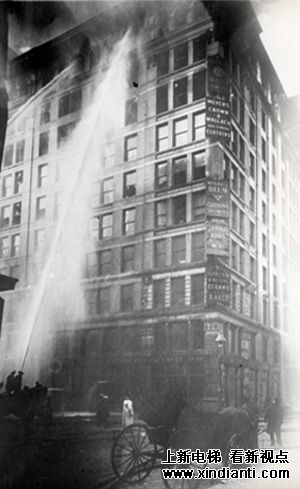
火灾现场

电梯操作员Joseph Zito
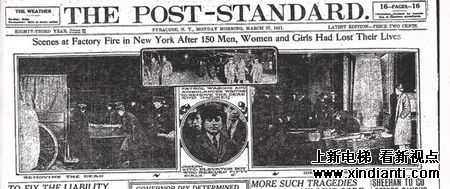
Joseph Zito在当时报纸的头条上
前情提示:100年前的1911年3月25日,座落在美国纽约曼哈顿一座10层建筑中的TRIANGLE WAIST公司发生火灾,导致146人死亡,大部分是妇女。这场火灾对美国社会影响巨大,火灾之后,美国工厂调查委员会、火灾调查局和消防局下属的火灾预防部门纷纷成立,人们开始关注建筑中紧急出口的设置、自动灭火喷水系统、消防演习和防火安全定期检查,城市的工厂相继成立劳工工会机构,保护员工,特别是女性员工的权利。这篇文章讲述了在火灾期间,一名电梯员救助逃生者的故事。
当火势从Triangle Waist公司的8层蹿升时,公司的电梯操作员Joseph Zito还在工作。当年27岁的意大利后裔Joseph Zito有宽厚的下巴和深色的脸庞。
当时是下午4点30分,快下班了。
火势迅速从8楼蔓延开来,点着了工厂地上2000多磅重的废布,工厂员工们(大多数是犹太裔和意大利后裔的年轻女人)都往紧急出口逃。火势窜升到了9楼,点着了那里的润滑油和油浸后的地板,结果越烧越大。
年轻的工人们被困在了9层。公司大楼平常不开放这一层的紧急出口,这么作为了防止员工偷盗工厂的布料逃走。
电梯工Zito在这楼里才干了6个月,他和妻子有一个小孩,住在MacDougal街。
浓烟快将9层的空间充满了,Zito两次用电梯带人们从10层逃生,这座6×9英尺大小的电梯里挤满了人。不久就出问题了,电梯只能到9层,最后只能到8层了。电梯根本撑不下那么多人,浓烟还会阻挡视线。
后来Zito的曾曾孙子Patrick Clancey说:“当时年轻的女工人们非常绝望,她们甚至用大号的剪刀试图从人群中‘杀’出一条路来,Zito用电梯一趟趟的将她们救出来。”Patrick Clancey和其家庭成员花了大量时间搜寻Zito在 Triangle Waist公司火灾时的细节。
Zito曾在接受《纽约时报》采访时称”逃生的员工都拼命往电梯里挤,她们抓着我的头发往里冲,人们一个踩着一个。电梯容量是10个人,我当时一次就拉了40人。”
Zito告诉过《芝加哥论坛报》说当时有的女孩晕倒在电梯里,到站时人们只得拖着她们出来,“逃生者中女人占大多数,也有几个男的。”
电梯向下运行时,电梯顶部传来重重的撞击声,那是从上面掉下来的身体的撞击声,原来在上层等待救援的人们将安全门打开,面对空荡荡的电梯井,火势迫使他们往前挤,有人被挤了下去,从电梯井坠落到Zito的电梯上,最后一趟时,Zito看见尸体的鲜血从顶部渗下来。
Zito之后听见像是电梯缆绳折断的声音,事后他发现电梯顶部足足有19具尸体。最后各个媒体报道从25具到50具不等。
消防人员随后赶到现场,但是消防梯只能伸到6楼。逃生者甚至从窗户跳出来,他们下落的太快,把地面上安放的安全网都扯裂了,结果安全网根本没起到保护作用。
火灾之前,女员工们刚拿到薪水,火灾后,她们的钱都被烧没了。Zito在电梯里看到许多沾着鲜血的美元硬币。
消防员之后在一层发现了腿部受伤的Zito,他被浓烟呛得够呛,还差点被消防员喷往电梯里的水淹死。
《纽约时报》称Zito救了100个女孩。火灾持续18分钟,造成146人死亡,
尽管得救了,Zito之后的健康情况却在下降,甚至连累到了妻子,他妻子后来流产,慈善机构为此给了他400美元。次年2月,他又能工作了。
之后的诉讼中,Triangle Company公司妄图收买得救员工,让他们“证实”工作环境很安全,遭到Zito的拒绝,Clancey说:“他没有被收买,他要真实的讲述这个故事。”
Zito于48岁去世,死后,《新泽西观察家》的头版标题是“这位拯救100条生命的人死时身无分文。”Zito的最后十年在新泽西州度过。
Family Keeps Memory of Hero Triangle Fire Elevator Operator Alive
When the fire broke out on the eighth floor at the Triangle Waist Company Joseph Zito continued doing his job. The 27-year-old Italian immigrant with a solid jaw and dark features kept the elevator running.
It was about 4:30 p.m. Nearly quitting time.
The fire quickly spread from the eighth floor, igniting the over 2,000 pounds of scrap fabric on the factory floor and sending the employees — mostly young women, Jewish and Italian immigrants — scrambling for the exits. Flames spread to the ninth floor where small barrels of oil used for lubricating the sewing machines and oil soaked floor boards proved perfect fire starters.
Adding to the tragic confusion, the young workers on that floor found themselves locked in. The company regularly locked the ninth floor exits, particularly around that time, so they could be sure none of the girls were stealing fabric or thread on their way home.
Zito had only been working in the building for about six months. He lived just around the corner on MacDougal Street and had a young wife and small child.
As smoke filled the building, the young elevator operator made two trips to the 10th floor, filling his elevator with as many people escaping from the flames as he could fit in the 6-by-9-foot elevator. But soon conditions deteriorated and he could only make it up to the ninth floor, and eventually only the eight floor. There were more workers than the elevator could hold, and eventually the smoke made it hard to see anything.
"The young women were desperate to get in. They were using their huge shears to fight their way in, and he was stabbed a number of times by these shears. He continued to make trips as long as he could," said Patrick Clancey, Zito’s great-great grandson, who, along with other members of his family, have tirelessly researched the details of Zito’s life and his role in the Triangle Waist Company fire.
Zito reportedly told the New York Times that day that they "pulled my hair, dived on top of me, climbed on the roof, and packed themselves in on top of each other. The car is built for 10 passengers. I carried 40 on the last trip down."
Zito told a Chicago Tribune reporter at the time that girls fainted on the way down and had to be dragged out: "There were several men too who crowded their way into the car in spite of the girls." Zito said.
As the elevator crept down, Zito heard a sickening thump. Girls had been crowding the open shaft waiting for the elevator to return, but the fire and panic propelled them forward. Bodies piled up and blood leaked through the elevator as Zito made his final trip down.
But then Zito heard the elevator cables snap. Clancey said Zito claimed he'd found there were 19 bodies on top of the elevator. Reports at the time range from 25 to 50 bodies.
The fire department arrived quickly, but found their ladders only reached the sixth floor. They watched helplessly as girls jumped out of the window. They tried placing safety nets, but the bodies were falling too fast, and ripped through the nets, hardly slowing their fall, according to Curtis Lyon, the director of the Kheel Center at Cornell University’s school of Industrial and Labor Relations.
Many of the girls had just gotten paid, and their money envelopes had been torn to shreds. Coins mixed with blood dropped on Zito as he waited for rescue at the bottom of the elevator shaft.
A firefighter later found Zito in the basement with a broken leg, suffering from smoke injuries and nearly drowned from the firefighter's water that had begun rising at the bottom.
The New York Times reported that Zito had saved 100 girls that day.
The fire only lasted about 18 minutes but resulted in the deaths of 146 people.
Joseph Zito survived that day, but Clancey said he was never same again. A Red Cross report at the time claimed his health was seriously compromised from the fire and that his wife, pregnant at the time, suffered a miscarriage. The Charity Organization Society decided to award him $400 for his losses and the Red Cross reported that by the following February he was well enough to work again.
In a later lawsuit, many Triangle Company workers were bribed to testify that working conditions were safe, but Zito’s family said he refused: "It was another sense of pride, that he was incorruptible, he wasn't willing to change his story for money," Clancey said recently.
After the fire, family research traced Zito to Ohio, where he was a railroad worker, but was eventually laid off, returned to New Jersey, remarried with six children.
On October 25, 1932, Jersey Observer's headline read, "Saved 100 From Death, Dies Penniless." It was reported that Zito, then 48-years old, had died. He’d been living in New Jersey for the previous 10 years.
相关文章